The Raptor Remote Intervention Tool, or RIT, is essentially a multifunctional subsea crawler platform designed to carry out intervention and seabed operations without relying on large conventional ROV spreads or diver-based operations.
It has integrated manipulation capability, tooling interfaces, cameras, sonar, and anchoring functionality, which means it can undertake a range of subsea activities from inspection and surveys through to anchor handling and maintenance scopes.
Importantly, it’s designed around a relatively low logistical footprint compared with larger traditional systems, which is a major advantage for nearshore renewables, offshore wind, and future tidal projects. The system aligns closely with the wider direction of travel in offshore operations: reducing offshore personnel exposure, lowering vessel and operational cost, and increasing flexibility in how intervention work is delivered.
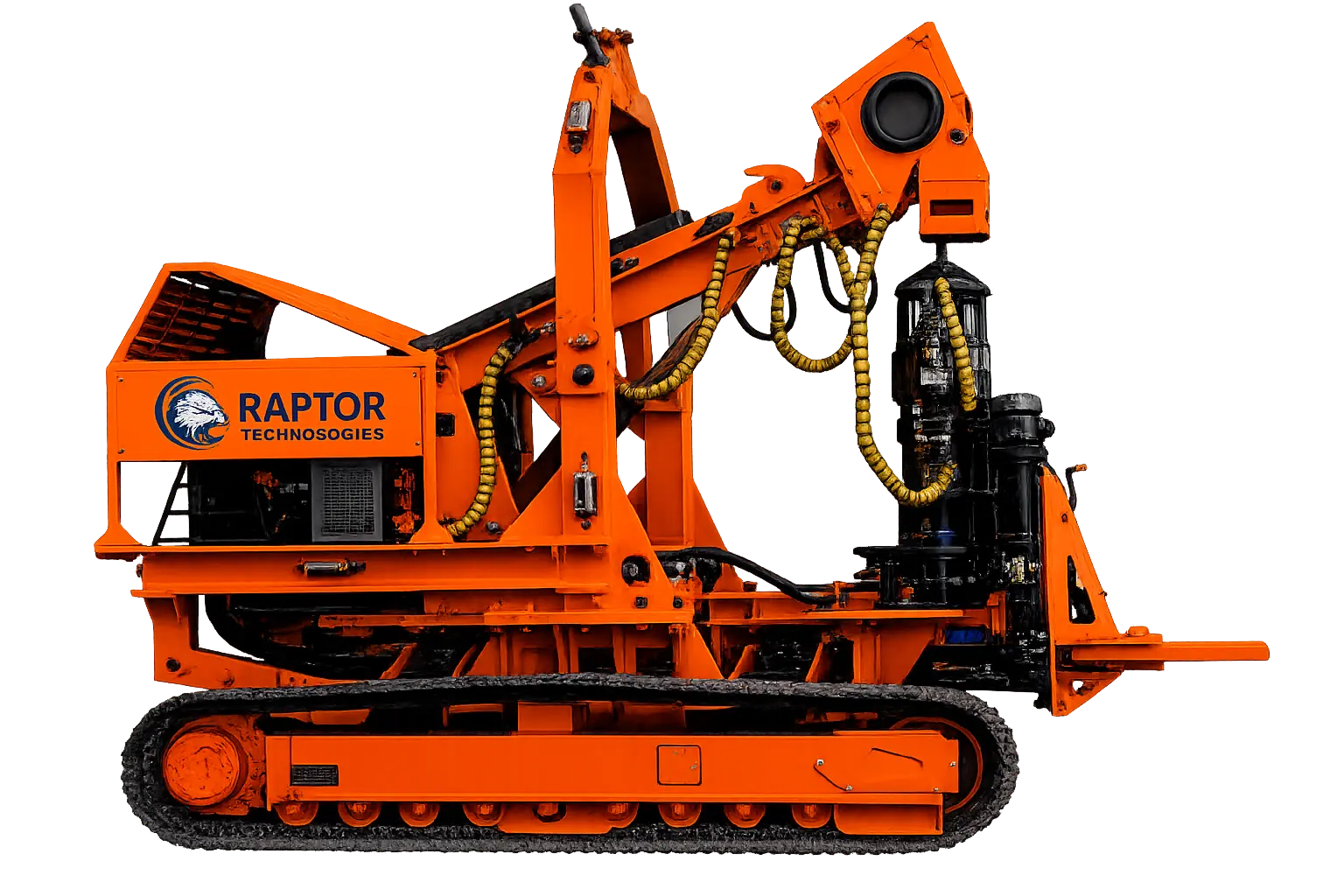
A tracked (crawler) system, designed for stability on the seabed.
An anchor gripping system for secure attachment to components.
Equipped with a manipulator arm, such as the Schilling Orion 7 RE, for various intervention tasks.
240 V, 13 A electrical input, providing 33 kW / 60 LPM / 207 bar hydraulic power for tools.
Sonar such as the Gemini 720id, plus multiple cameras including pan & tilt for navigation and work supervision.
Designed for operating depths up to 100 metres.
The RIT can connect and operate anchor tensioning tools (ATT) with a 100 t rated pretension load; it is designed for installation and maintenance tasks on offshore wind farms; and with integrated cameras and sensors it can perform subsea surveys and inspection. The RIT provides a lightweight, lower-cost alternative for seabed work, supporting the energy transition by enabling remote operations — a flexible, “plug-and-play” solution that reduces the environmental footprint of subsea work.
| Length (Operating) | 4.3 m |
| Width (Operating) | 2.2 m |
| Height (Operating) | 2.9 m |
| Height (Transport) | 2.2 m (20' ISO Container) |
| Weight (in Air) | 5.2 t |
| Operating Depth | 100 m |
| Design Depth | 1000 m |
| Max. Seabed Slope | 20° |
| Rated Driving Speed | 1 m/s |
| Pitch Capability | +/- 12° |
| Roll Capability | +/- 12° |
| Rated Pretension Load | 100 t |
| Max. Setting Torque | 1 kNm |
| Design Hex Size | 260 mm A/F |
| Rated Lift Capability | 1 t @ Max Jib |
| Max Crane Height | 3.4 m * |
| Max Jib | 1.5 m |
| Crane Boom Range | +28° / -18° |
| Slew Range | +/- 19° |
| * Measured from seafloor to fleeting mechanism | |
| Peak Hydraulic Demand | 33 kW |
| Rated Hydraulic Flow | 60 LPM |
| Rated Hydraulic Pressure | 207 bar |
| Electrical Power Input | 240 V, 13 A |
| Oil Type | Biodegradable |
| Spare Hydraulic Functions | 2 |
| Manipulator Arm | Schilling Orion 7 RE |
| Fixed Cameras | 3x LUXUS PUR SD |
| Lights | 3x Bowtech LED K-Series |
| Pan & Tilt Cameras | 2x Spyball SSB-HD |
| Sonar Specification | Gemini 720i (+ pan + tilt) |
Reducing offshore personnel exposure and operational cost.